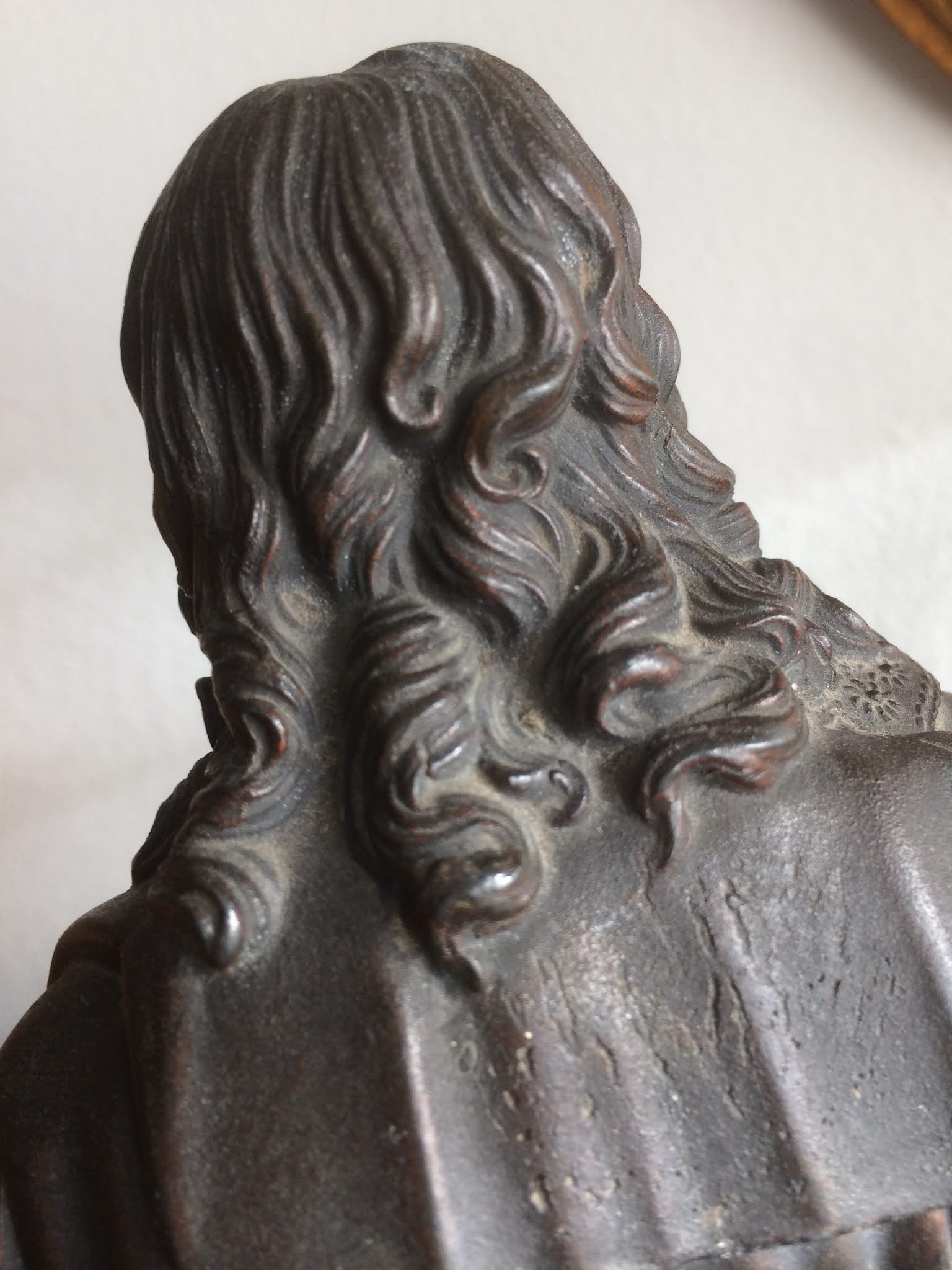
Hein was born in Delfshaven (now part of Rotterdam), the son of a sea captain, and he became a sailor while he was still a teenager. In his twenties, he was captured by the Spanish, and served as a galley slave for about four years, probably between 1598 and 1602, when he was traded for Spanish prisoners. Between 1603 and 1607 he was again held captive by the Spanish, when captured near Cuba.
In 1607, he joined the Dutch East India Company and left for Asia, returning with the rank of captain (of the Hollandia) five years later. He married Anneke Claesdochter de Reus and settled in Rotterdam. In 1618, when he was captain of the Neptunus, both he and his ship were pressed into service by Venice. In 1621 he left his vessel behind and traveled overland to the Netherlands. For a year in 1622 he was a member of the local government of Rotterdam, although he didn't even have citizenship of this city: the cousin of his wife, one of the three burgomasters, made this possible.
In 1623, he became vice-admiral of the new Dutch West India Company (WIC) and sailed to the West Indies the following year. In Brazil, he briefly captured the Portuguese settlement of Salvador, personally leading the assault on the sea fortress of that town. In August with a small and undermanned fleet he sailed for the African west coast and attacked a Portuguese fleet in the strongly defended bay of Luanda but failed to capture any ships. He then crossed the Atlantic ocean again to try and capture merchant ships at the city of Vitória, but was defeated by a resistance organized by the local citizenry with the assistance of the Portuguese garrison. After finding that Salvador had been recaptured by a large Spanish-Portuguese fleet Hein returned home. The Dutch West India Company, pleased with Hein's leadership qualities, placed him in command of a new squadron in 1626. In subsequent raids during 1627 at Salvador, he attacked and captured over thirty richly laden Portuguese merchant ships before returning to the United Provinces.
Modern historians today often classify Hein as a pirate, though he was more properly a privateer; the Dutch Republic was locked in mortal combat with the Habsburgs and Hein was among the most successful and famous commanders it employed during the Eighty Years' War. While many privateers behaved no better than common pirates, Hein was a strict disciplinarian who discouraged unruly conduct among his crews and had rather enlightened views for the times about "Indian" tribes, slaves and members of other religions. Also, he never was an individual privateer but rather commanded entire fleets of warships.
Spanish treasure fleet
Main article: http://en.wikipedia.org/wiki/Battle_in_the_Bay_of_Matanzas
In 1628, Admiral Hein, with Witte de With as his flag captain, sailed out to capture a Spanish treasure fleet loaded with silver from their American colonies and the Philippines. With him was Admiral Hendrick Lonck and he was later joined by a squadron of Vice-Admiral Joost Banckert, as well as by the pirate Moses Cohen Henriques. Part of the Spanish fleet in Venezuela had been warned because a Dutch cabin boy had lost his way on Blanquilla and was captured, betraying the plan, but the other half from Mexico continued its voyage, unaware of the threat. Sixteen Spanish ships were intercepted; one galleon was taken after a surprise encounter during the night, nine smaller merchants were talked into a surrender; two small ships were taken at sea fleeing, four fleeing galleons were trapped on the Cuban coast in the Bay of Matanzas.
After some musket volleys from Dutch sloops the crews of the galleons also surrendered and Hein captured 11,509,524 guilders of booty in gold, silver, and other expensive trade goods, such as indigo and cochineal, without any bloodshed. The Dutch didn't take prisoners: they gave the Spanish crews ample supplies for a march to Havana. The released were surprised to hear the admiral personally giving them directions in fluent Spanish; Hein after all was well acquainted with the region as he had been confined to it during his internment after 1603. The capture of the treasure fleet was the company's greatest victory in the Caribbean.
As a result, the money funded the Dutch army for eight months (and as a direct consequence, allowing it to capture the fortress 's Hertogenbosch), and the shareholders enjoyed a cash dividend of 50% for that year. Hein returned to the Netherlands in 1629, where he was hailed as a hero. Watching the crowds cheering him as he stood on the balcony of the town hall of Leyden he remarked to the burgomaster: "Now they praise me because I gained riches without the least danger; but earlier when I risked my life in full combat they didn't even know I existed...". Hein was the first and the last to capture such a large part of a Spanish "silver fleet" from America.
Lieutenant-Admiral
He became, after a conflict with the WIC about policy and payment, Lieutenant-Admiral of Holland and West Frisia on 26 March 1629, and thus factual supreme commander of the confederate Dutch fleet, taking as flag captain Maarten Tromp. He died the same year, in a campaign against the Dunkirkers, the highly effective fleet of Habsburg commerce raiders and privateers operating from Dunkirk. As it happened his flotilla intercepted three privateers from Ostend. He deliberately moved his flagship in between two enemy ships to give them both simultaneous broadsides. After half an hour he was hit in the left shoulder by a cannonball and was killed instantly. He is buried in the Oude Kerk in Delft.
Commemoration
The Piet Hein Tunnel in Amsterdam is named in his honor, as is the former Dutch Kortenaer class frigate, Hr. Ms. Piet Heyn.
A direct descendant of Hein was Piet Hein, a famous 20th century Danish mathematician, physicist and poet.
A song praising Admiral Hein's capture of the Spanish "silver fleet" written in 1844 is still sung by choirs and children at primary school in the Netherlands.